Washing and Scalp Care for Frizzy Hair
The foundation of any solid at-home hair maintenance routine starts in the shower. For frizzy hair in humidity, **gentle, moisturizing shampoos** make all the difference — they cleanse without stripping your hair’s natural protective oils, which is exactly what you need when the air is already working against you. Avoid anything labeled “clarifying” or anything that lists sulfates as a top ingredient, because those compounds raise the cuticle and invite frizz the moment you step outside.
Look for **sulfate-free shampoo formulas** that contain nourishing ingredients like aloe vera, oat extract, or coconut-derived cleansers. These clean the scalp gently while helping your hair retain moisture. When you shampoo, spend a little extra time massaging your scalp with your fingertips — this boosts circulation and ensures a truly clean foundation for your conditioning steps that follow.
**Pro tip:** If your hair feels tight or squeaky clean after shampooing, that’s a sign the formula is too harsh. Switch to a gentler option and notice how much more cooperative your hair becomes during the rest of your routine.
- Use lukewarm water — hot water opens the cuticle and worsens frizz
- Focus shampoo on your scalp; let the rinse carry cleanser down the lengths
- Rotate between your regular gentle shampoo and a **moisturizing shampoo for frizzy hair** every few washes
Quick pick: Compare top-rated Hair options.
Deep Conditioning Treatments
Deep conditioning is where the real magic happens for frizzy, humidity-prone hair. A **deep conditioning mask** once a week delivers intense hydration that your regular conditioner simply cannot match. Think of it as a weekly reset — the kind of moisture replenishment that keeps your strands smooth, elastic, and far less reactive when humidity levels spike.
When you apply your mask, **focus on the mid-lengths and ends** where damage and dryness accumulate first. Your roots get plenty of natural oils from your scalp, so concentrating treatment there is the most efficient use of the product. After applying, use a wide-tooth comb to distribute the mask evenly through each section.
For best results, **leave your deep conditioner on for 5–10 minutes** while you let the steam from your shower work in your favor — the warmth opens the hair cuticle and allows the conditioning agents to penetrate more deeply. Rinse with cool water to seal the cuticle and lock in all that moisture. You’ll feel the difference immediately: smoother texture, better elasticity, and significantly less frizz.
- Apply to damp hair for better absorption
- Wrap hair in a warm towel to boost penetration
- Rinse with cool water to seal the cuticle
Heat Protection and Styling
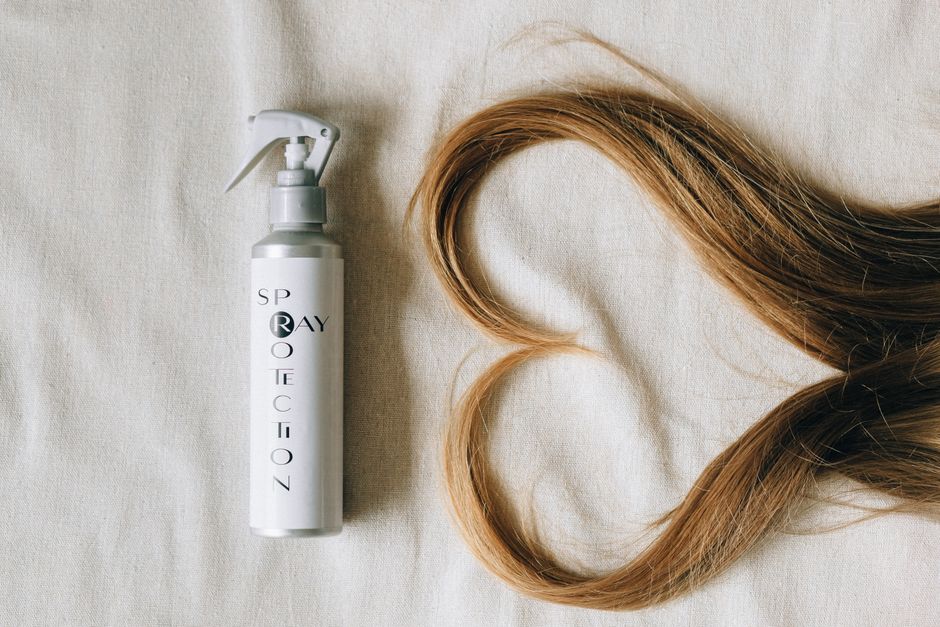
Even when you’re doing your at-home hair maintenance routine, heat styling tools are part of the process for most people. The non-negotiable step? **A quality heat protectant** applied every single time before you reach for a flat iron, curling wand, or blow dryer. Without this barrier, temperatures above 350°F can bake moisture right out of your hair shaft and make humidity-related frizz dramatically worse.
Look for heat protectant sprays or serums that list **silicone compounds like dimethicone** or conditioning agents like keratin and argan oil on the label. These ingredients form a thin protective coating around each strand that disperses heat evenly and prevents moisture loss. Apply to damp hair before blow drying, then follow with your preferred styling tool.
Whenever possible, **choose styling tools with adjustable temperature settings**. Fine or chemically treated hair typically needs 300–350°F, while thicker or coarser textures can handle 375–400°F. Lower heat preserves your hair’s internal moisture, which is the single biggest factor in how resistant your hair is to humidity-induced frizz.
- Apply heat protectant to each section before styling
- Never exceed 400°F on any styling tool
- Let hair air-dry partially before using hot tools
Styling and Finishing Products for Frizz Control
After heat styling, the right finishing products seal in moisture and build a defense layer against humidity. The **best leave-in conditioner for frizzy hair in humidity** is typically a lightweight, silicone-infused formula that adds slip and hydration without greasing up your strands. Apply it to damp hair, focusing on the areas most prone to frizz — usually around your crown, temples, and nape.
Follow your leave-in conditioner with a **smoothing serum or hair oil** to create a physical barrier against atmospheric moisture. Serums with dimethicone, argan oil, or marula oil work particularly well because they weigh down the cuticle slightly and prevent it from absorbing excess water from humid air. A little goes a long way — start with one pump for medium-length hair and add more only if needed.
| Product Type | Best For | Key Ingredients to Look For |
|---|---|---|
| Leave-in conditioner | All-day moisture and slip | Hyaluronic acid, aloe, glycerin |
| Smoothing serum | Humidity blocking and shine | Dimethicone, argan oil, keratin |
| Lightweight hair oil | Nourishing without heaviness | Marula oil, squalane, jojoba |
| Anti-humidity spray | Setting style in tropical climates | Silicone polymers, panthenol |
Protecting Hair from Humidity
Humidity is arguably the biggest enemy of smooth, styled hair, and it requires its own specific strategy. **Anti-humidity hair sprays and serums** are formulated with silicone polymers that physically block excess moisture from penetrating your hair cuticle. A light mist over your finished style — especially on humid days — can keep your hair smooth for hours longer than it would otherwise last.
The biggest mistake people make in humid climates is **reaching for alcohol-heavy styling products**. Alcohol evaporates quickly, which seems great at first, but it leaves your hair dry and actually more receptive to absorbing atmospheric moisture. Always read labels and avoid any product that lists alcohol in the first five ingredients.
Another effective technique is **using a diffuser attachment** on your blow dryer. Diffusers spread airflow more gently across your hair, reducing mechanical friction that raises the cuticle and causes frizz. For particularly stubborn humidity days, a hooded dryer or a bonnet attachment at the end of your blowout session can help set your style with less exposure to ambient moisture.
- Mist anti-humidity spray over fully styled hair
- Keep alcohol-based gels and mousses to a minimum in humid weather
- Carry a small bottle of leave-in conditioner for mid-day touch-ups
Weekly Treatments for Healthier Hair
Beyond your daily routine, **once-a-week intensive treatments** keep your hair in peak condition and dramatically reduce how often frizz reappears. A nourishing hair oil — applied to damp hair and left in for at least three hours — delivers essential fatty acids and vitamins that strengthen your hair from within. Almond oil, coconut oil, and grapeseed oil are all exc nt choices for this type of weekly treatment.
To apply, **comb the oil through your hair using a wide-tooth comb** starting from the ends and working upward. This ensures even distribution without unnecessary pulling or breakage. For an extra boost, wrap your hair in a warm towel or cover it with a shower cap — trapped body heat accelerates absorption. The longer you can leave the treatment in, the better, with some people preferring to apply it before bed and wash it out in the morning.
Between weekly oil treatments, a **bond-repairing mask** every two to three weeks helps rebuild the internal structure of hair that has been exposed to heat styling or chemical processing. This is an especially smart move if you color-treat your hair or use relaxers, as these processes weaken the disulfide bonds that give hair its strength and smoothness.
- Apply nourishing oil to damp hair, focusing on the ends
- Use a wide-tooth comb to distribute evenly
- Leave treatments in for a minimum of 3 hours or overnight
Frequently Asked Questions (FAQ)
Q: What is the best leave-in conditioner for frizzy hair in humidity?
A: The best leave-in conditioner for frizzy hair in humidity is a **lightweight, silicone-infused formula** that delivers moisture without weighing hair down. Look for ingredients like hyaluronic acid, glycerin, and aloe vera for hydration, paired with dimethicone or argan oil for humidity-blocking power. The ideal product should feel silky, not greasy, and should be reapplicable throughout the day without building up on your strands.
Q: How often should I deep condition my hair if it is frizzy?
A: **Once a week is the standard recommendation** for deep conditioning frizzy or dry hair. If your hair is particularly damaged, color-treated, or coarse, you can safely bump that up to twice per week. Just be sure to use a rinse-out deep conditioner for your intensive sessions and a lighter formula for more frequent use to avoid over-softening your hair’s structure.
Q: What causes frizzy hair in humidity?
A: Humidity-related frizz occurs when your hair’s cuticle absorbs excess water from the air, causing the shaft to swell unevenly and refract light in multiple directions instead of laying flat. **Over-processing with heat or chemicals**, using sulfate-rich shampoos, skipping moisturizing products, over-washing, and rough towel-drying all make this worse by leaving your cuticle raised and your hair’s moisture balance disrupted.
Q: Can I use a leave-in conditioner instead of a deep conditioner?
A: No — these products serve different functions and are **not interchangeable**. A deep conditioner works in 5–10 minutes and gets fully rinsed out, delivering a high concentration of active ingredients. A leave-in conditioner stays in your hair all day, providing continuous moisture and friction reduction. For the best results, use both in your weekly routine: deep conditioner as your treatment layer, leave-in conditioner as your daily maintenance layer.
Top Product Recommendations
| Product Name | Rating | Key Feature | Est. Price | Action |
|---|---|---|---|---|
| Top-rated sulfate free moisturizing shampoo for frizzy… | ★★★★★ | Editor-recommended sulfate free moisturizing shampoo for frizzy… from this guide | $18–$42 | Check Lowest Price on Amazon |
| Best-value deep conditioning hair mask for dry damaged hair | ★★★★☆ | Affordable deep conditioning hair mask for dry damaged hair — strong everyday results | $12–$28 | Check Lowest Price on Amazon |
| Premium heat protectant spray for frizzy hair | ★★★★☆ | Higher-end heat protectant spray for frizzy hair for visible, lasting results | $45–$95 | Check Lowest Price on Amazon |
Affiliate Disclosure: This post contains affiliate links. We may earn a commission if you buy through our links, at no extra cost to you.
Leave a Reply